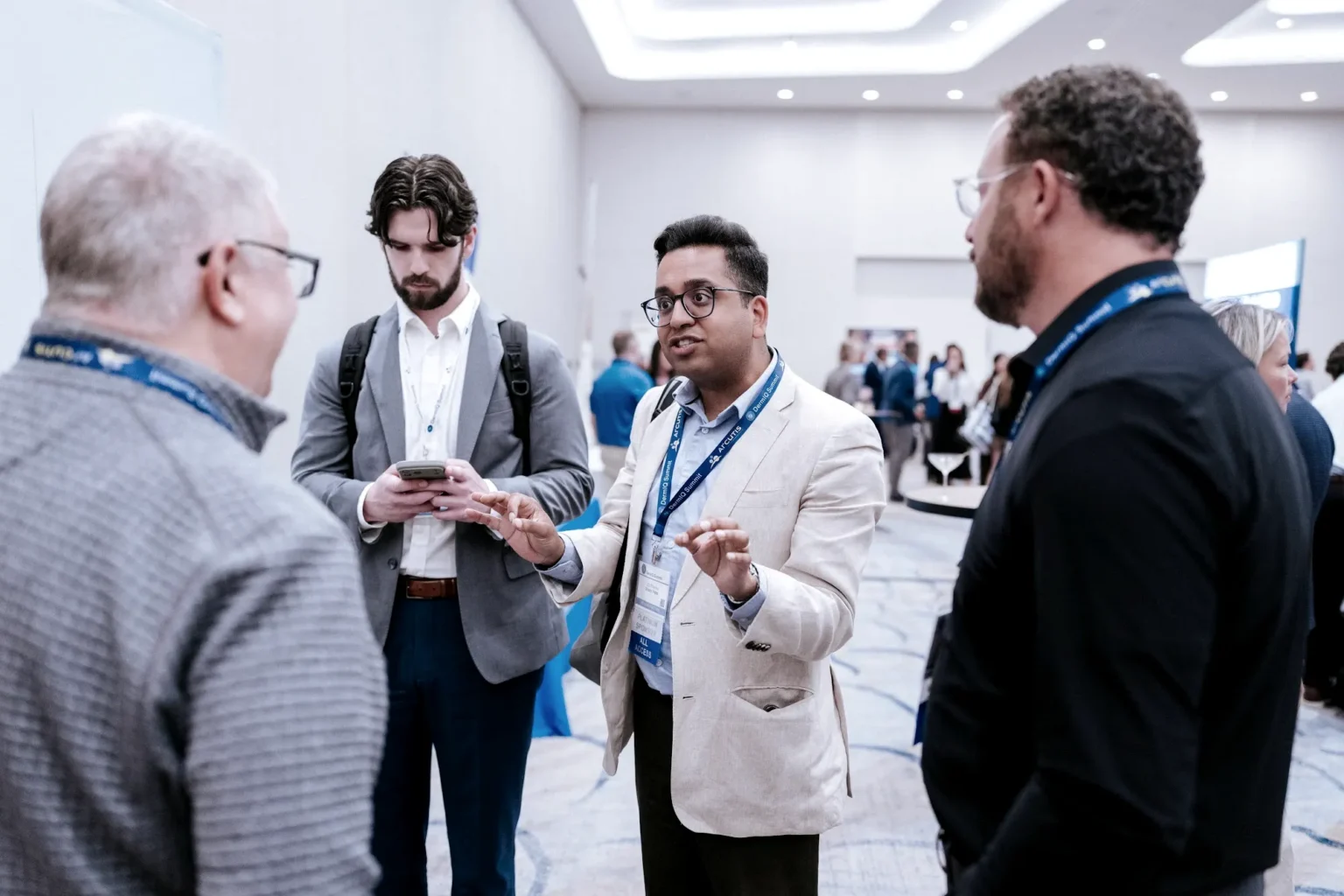
Walk into almost any dermatology practice and a physician assistant or nurse practitioner is likely seeing a share of the patients. Many medical meetings still treat them as attendees first. DermIQ was built on a different assumption: the people doing the work should help teach it.
How big is the APP role in dermatology?
Large, and still growing. Among clinicians caring for Medicare patients, advanced practice clinicians rose from about 28% of the dermatology workforce in 2013 to 37% in 2020, and their share of dermatology office visits rose from 15.5% to 27.4% over the same period (Mohr et al., JAMA Dermatology, 2023).
The PA count alone tells a similar story. The National Commission on Certification of Physician Assistants reported 4,580 board-certified PAs practicing in dermatology in 2021, roughly double the 2,323 it counted in 2013.
Those numbers cover medical dermatology. In aesthetic practice, PAs and NPs are often the clinicians performing injections and device treatments day to day. Either way, the care team that touches skin looks different than it did a decade ago, and education has to catch up.
If PAs and NPs are seeing the patients, they belong at the podium too.
What do APPs do across medical and aesthetic dermatology?
Nearly everything the patient sees. APPs evaluate rashes and lesions, perform biopsies, manage chronic inflammatory disease, monitor systemic therapy, and handle follow-up between physician visits. In aesthetics they consult, plan and treat.
They also sit at the referral points that matter. An APP in primary care, urgent care or a dermatology practice is often the one who decides whether a patient with eczema, hives or recurrent abscesses gets escalated, and to whom. That makes APP education a referral pathway issue, not just a professional development issue.
Why does DermIQ put APPs on stage?
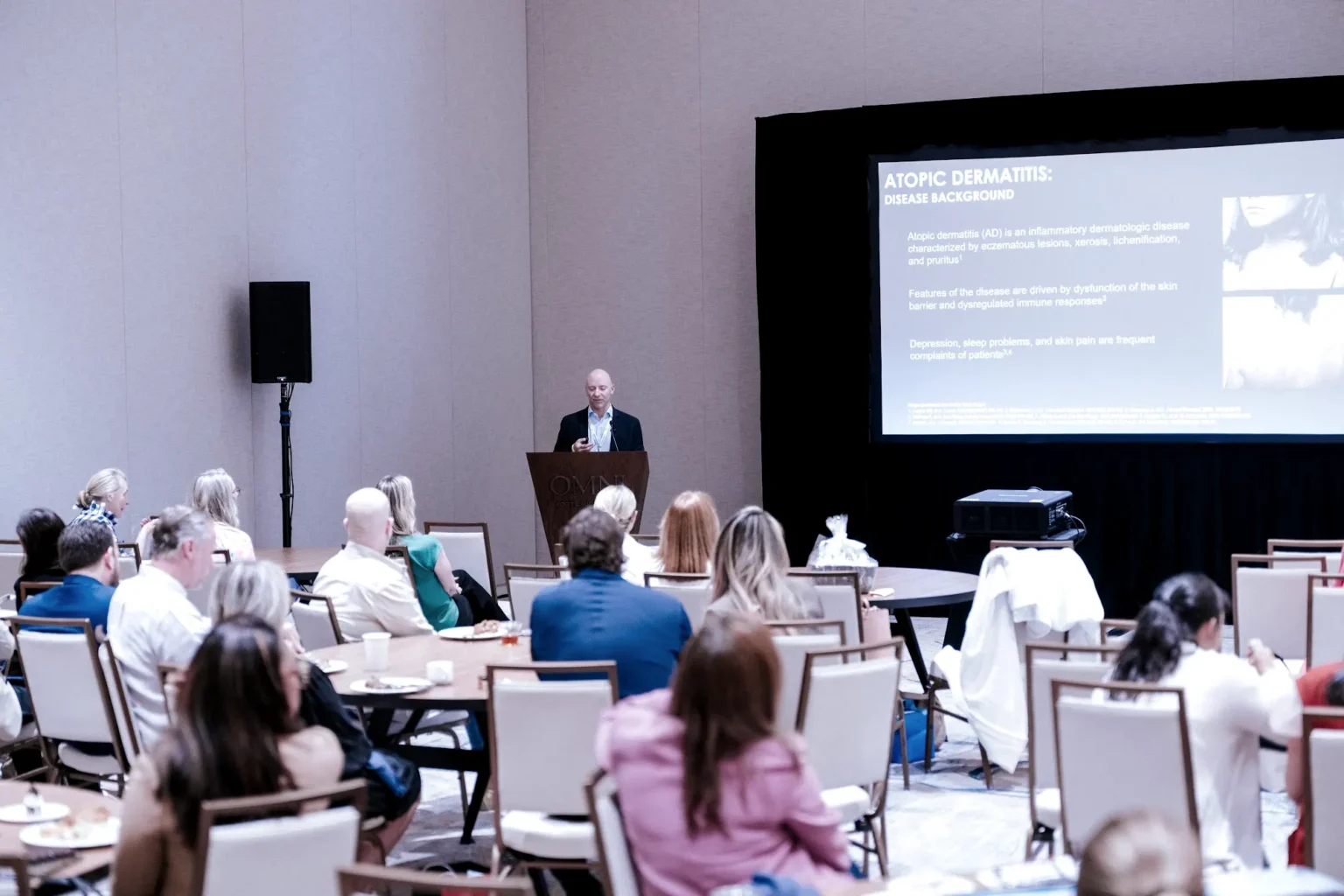
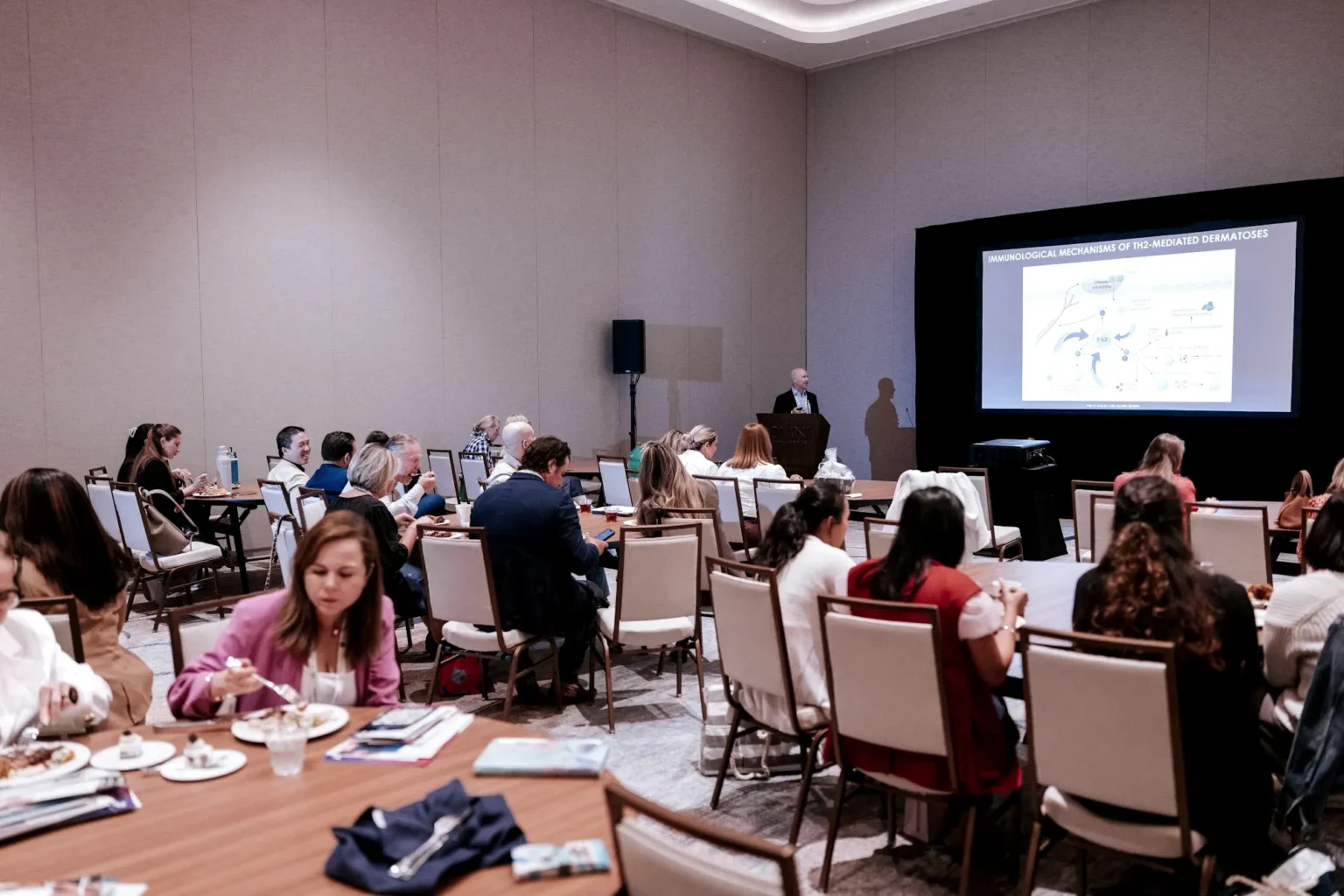
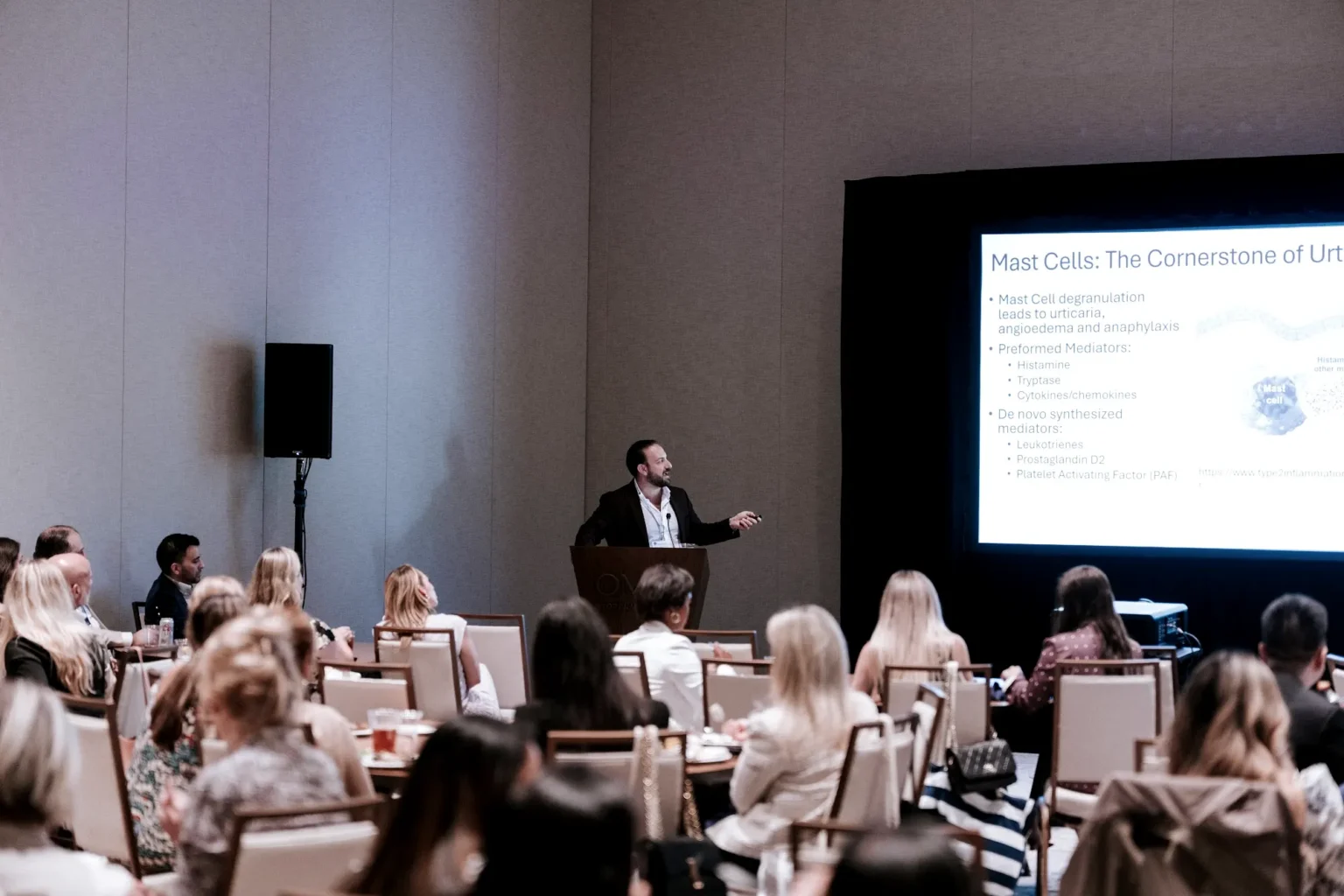
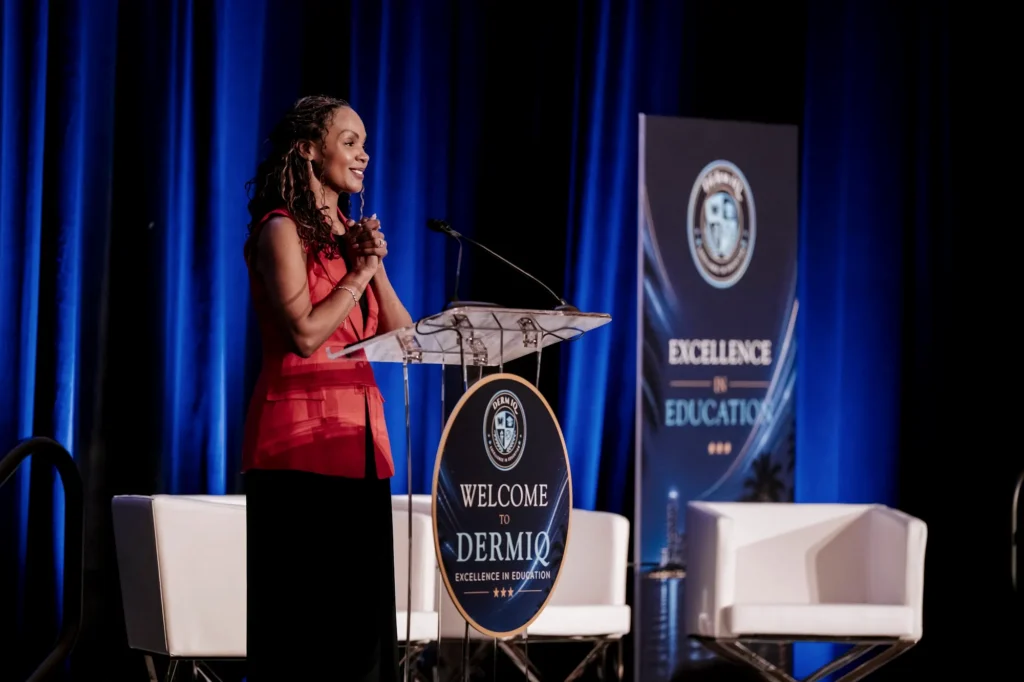
Because they see the patients, and their cases are the cases everyone else needs to hear. If PAs and NPs are seeing the patients, they belong at the podium too. At the DermIQ Summit 2026, PAs Tracee Blackburn, Shanna Miranti, Jonathan Sigg and Contessa Gilman taught alongside physician faculty.
That choice was deliberate. DermIQ co-founder Risha Bellomo, MPAS, PA-C, built her career in the same care teams these clinicians work in. The organization's line, "If You Touch Patient Skin Care You Belong Here," is meant literally. Belonging means more than a seat in the audience.
APP faculty bring something specific to the room. They know what a busy follow-up clinic looks like, which questions patients ask after the physician leaves, and where handoffs break down. When a PA walks through a case, other PAs and NPs see their own clinic in it. So do the physicians.
None of this is about replacing physician expertise. It is, to borrow DermIQ's phrase, "not to blur roles, but to clarify them." A room where physicians and APPs teach each other is a room where everyone leaves with a clearer sense of who does what.
CME for the whole care team
DermIQ programs are built so that physicians, PAs and NPs earn CME in the same sessions. At the DermIQ Summit 2026, CME was jointly provided by Amedco LLC and QMED CME, and non-CME product theaters were labeled separately.
That matters for two reasons. First, the team learns the same framework at the same time, which makes the conversation back at the practice easier. Second, it signals that APP learning is part of the core curriculum, not a side track.

What should APPs look for in dermatology education?
Programs that teach decisions, not just facts. A few questions are worth asking before you register:
- Is it case-based? Real cases teach judgment. Slide decks of mechanisms do not, on their own.
- Who is on the faculty? Look for APPs as presenters, not only as moderators or attendees.
- Is CME open to the whole team? Physicians, PAs and NPs should be able to learn in the same room.
- Is sponsor content labeled? Non-CME sessions should be clearly marked. Supporters can help fund an event, but at DermIQ "they don't write the curriculum."
- Does it cover referral? You should leave knowing when to treat and when to send the patient on.
- Does it continue after the meeting? DermIQ is planning a year-round layer of recorded sessions, faculty-led power hours and case discussions, so learning does not stop at the door.
For a look at where APPs in primary care often first see a complex skin disease, read hidradenitis suppurativa and the long road to diagnosis. For the March program, see inside the DermIQ Dermato-Allergy Exchange.
What's next
PAs and NPs are part of the audience, and the faculty, at every DermIQ event. The DermIQ Dermato-Allergy Exchange runs March 13 to 14, 2027, in Tysons Corner, VA, with one $99 registration price for every clinician. The Summit 2027 waitlist is open now.
Education for every clinician who touches skin. Written for clinicians, not as advice for patients. Questions or a case to share? Write to us.